
Editorially earned links from real publications. No marketplaces, no guest post networks, no PBNs, and nothing that can be penalised later.






Not volume. Authority, relevance and permanence.
Publications with real editorial standing in your category. Authority is not linear: a national masthead and a guest-post farm differ in kind, not degree.
Titles whose readers are plausible customers, pointing at pages plausibly relevant to the story. Relevance turns authority into ranking movement.
The link sits inside a real article on a masthead going nowhere. It does not vanish when a payment stops.
Authority earned by one page flows through internal links, which is why a few strong links move categories never mentioned in the coverage.
Every other way of building links has the same shape: it works, then it gets detected, then the sites that relied on it pay for it.
Recycled sites with obvious footprint patterns, sold by the unit.
Thin-traffic blogs that exist to host anyone willing to pay.
Strong until the day they are not, and then every linked site is hit at once.
Low risk, and close to zero value in return.
The honest caveat: digital PR produces fewer links than any of the above. Compare on quality-adjusted, risk-adjusted return rather than volume, and the comparison stops being close.
Because the links are editorially given by journalists at real publications, there is nothing to detect and nothing to penalise. Each update that hardens against manufactured links clears out competitors who took shortcuts you did not take.
The more aggressive the enforcement, the better your relative position. That is the entire argument, and it is why we build links this way and no other.
For an ecommerce site the destination matters as much as the source, and this is where most PR-led link building underdelivers.
A homepage link. Fine, but rarely the most valuable placement available, and it does little for the category pages that actually translate into revenue.
Campaigns whose editorially natural link destination is the commercially useful page, so a journalist acting entirely in their reader's interest lands on the page you wanted anyway.
We start from your rankings, not from a story. Which commercial pages are stuck, what ranks above them, and how much authority sits in between. That tells us which categories the campaigns need to serve.
Campaigns built at three distances from the business: category-led for tight commercial relevance, sector-led for wider authority, cultural for reach and syndication.
Data sourced from your own systems, public datasets, freedom of information requests, search trend data or a commissioned survey. Assets built so a journalist can lift the story without extra work. A real, named expert on the record.
The right thirty journalists, not the wrong three thousand. Mass sends train journalists to ignore you, get you marked as spam, and damage your sending reputation until even the good pitches stop arriving.
Links landed against your agreed target, qualified by publication, authority and relevance. On ongoing programmes we add referral traffic, branded search, ranking movement on the target pages, and AI citation tracking.
If you are making the case internally, this is the argument that has changed the numbers. AI assistants build their picture of a brand from what independent, trusted sources say about it, not from the brand's own website.
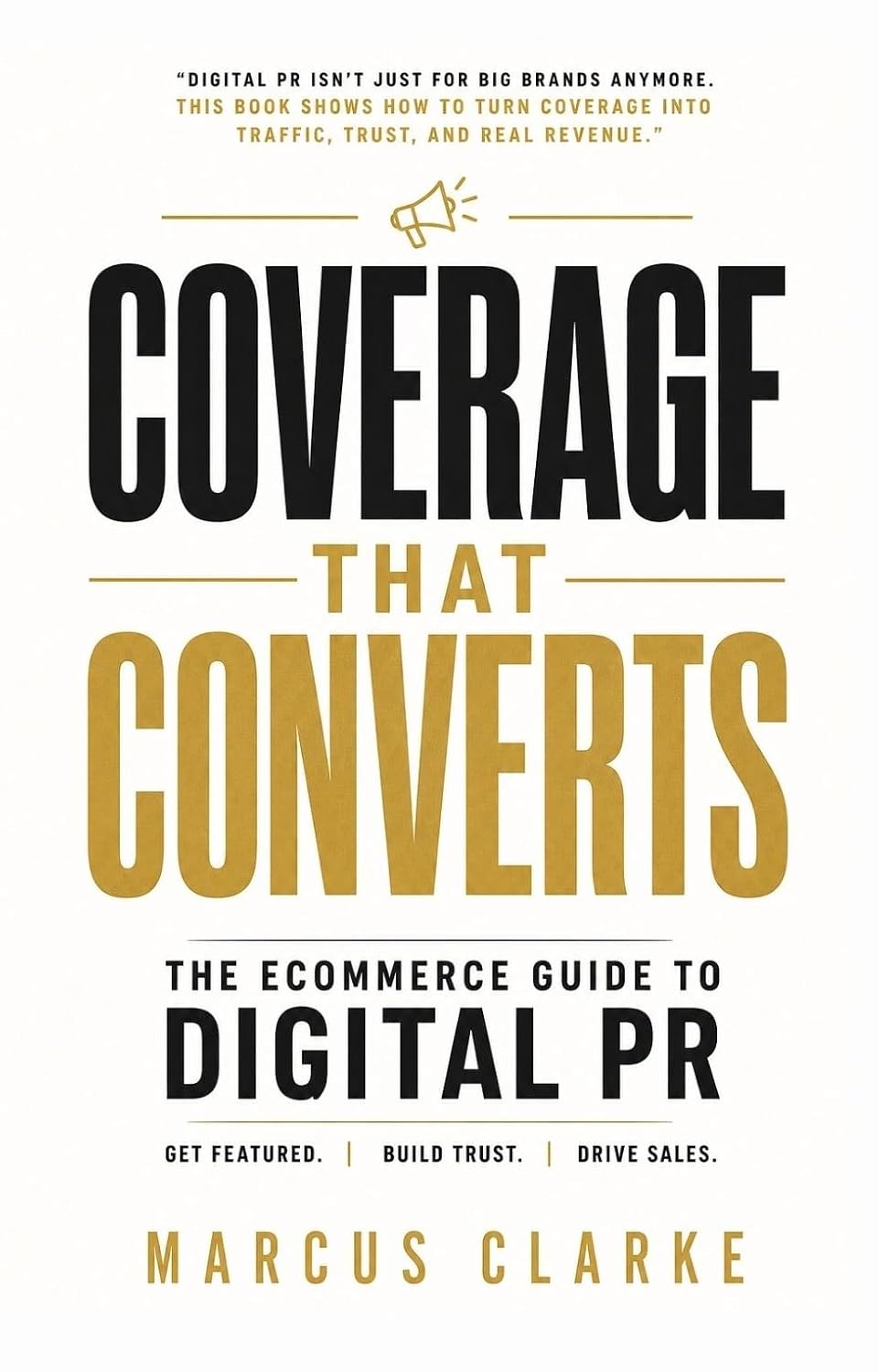
The research covered in Coverage That Converts found that earned media accounts for the overwhelming majority of citations across ChatGPT, Claude and Gemini, while paid and advertorial content accounts for a fraction of a percent. A study of 75,000 brands found brand mentions correlated far more strongly with AI visibility than backlinks did, and that publishing more content on your own site had almost no relationship with it.
The practical implication for a link building budget: money spent on placements that exist only to host a link buys you nothing in AI search, while money spent earning genuine coverage buys you both.
We agree a target of 5 or 10 editorially earned links before any work starts. Individual campaigns vary by category and angle, which is exactly why the target is set up front rather than left to chance.
We target publications with genuine editorial standing rather than a DR threshold, because DR is easy to manufacture and relevance is not. In practice most placements come from sites in the DR 70 and above range.
Most are. Some are not, and some coverage carries a brand mention with no link at all. Those mentions still count towards branded search and AI citations, which is why we report them alongside the links.
It is the right long-term rebuild, but it is not the first step. Disavow and clean-up come first, then earned coverage rebuilds the profile with links that carry no risk.
Yes. We run digital PR for agencies whose clients need earned links they cannot produce in-house, with reporting you can pass straight to your client, and we stay entirely behind the scenes.
Come with your brand and your goals. We will tell you honestly whether there is a strong digital PR programme here, and if there is, what it would look like.
Book a call
Searchant is an AI SEO and digital PR agency for ecommerce brands, based in North Yorkshire, UK.


 Amazon UK
 Amazon US
